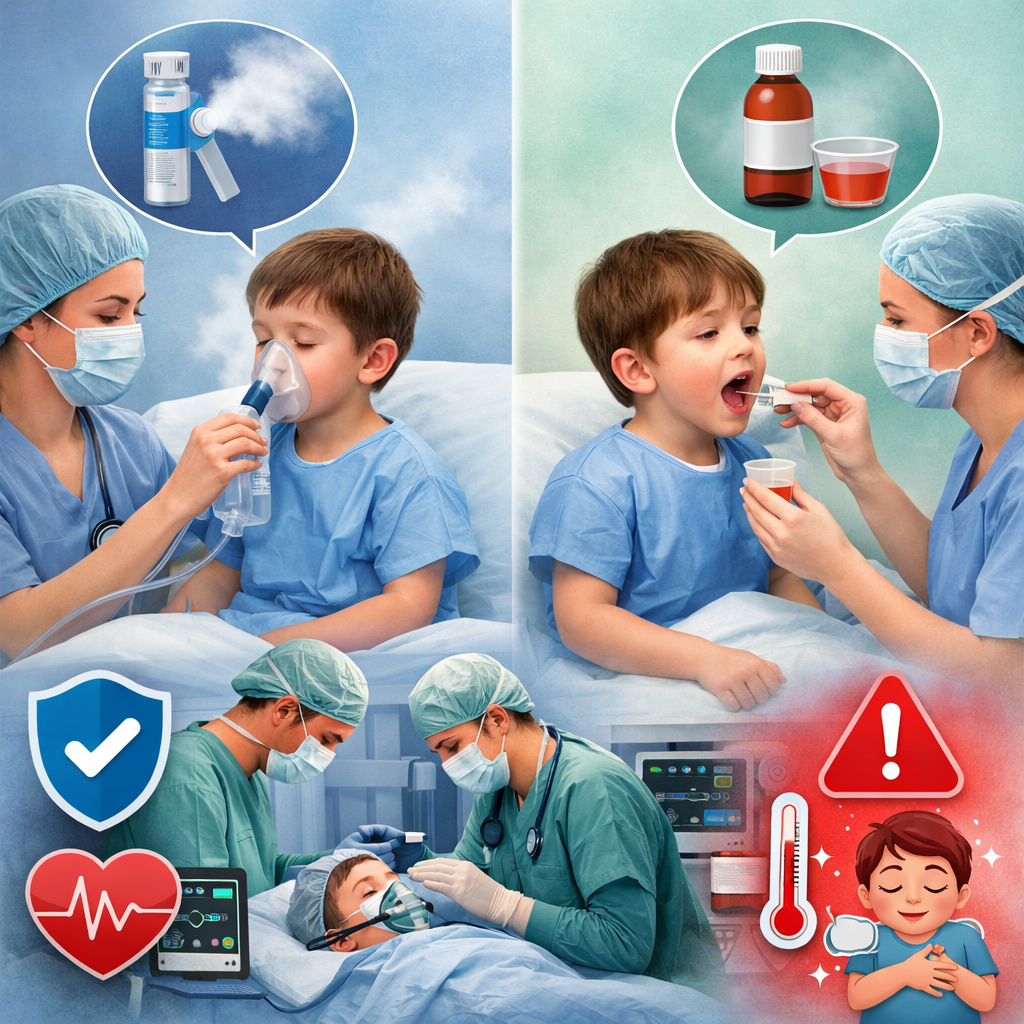
Efficacy and Safety of Nebulized Midazolam versus Oral Midazolam as Sedative Premedication in Pediatric Surgeries
Efficacy and Safety of Nebulized Midazolam versus Oral Midazolam as Sedative Premedication in Pediatric Surgeries
Abbas Ostadalipour1, Anahid Maleki1, Bita Malekianzadeh1, Motahhareh Sadeghi2, Alireza Takzare1, Nima Nazari3, Sumaiya Zahra4, Armin Sahba5, Parisa Kianpour3, Saghar Samimi1
1Eye Research Center, Farabi Eye Hospital, Tehran University of Medical Sciences, Tehran, Iran, 2Translational Ophthalmology Research Center, Farabi Eye Hospital,
Tehran University of Medical Sciences, Tehran, Iran, 3Anesthesia, Critical Care, and Pain Management Research Center, Tehran University of Medical Sciences, Tehran,
Iran, 4Department of Anesthesiology and Critical Care, International Campus, School of Medicine, Tehran University of Medical Sciences, Tehran, Iran, 5Department of Anesthesiology and Critical Care, School of Medicine, Tehran University of Medical Sciences, Tehran, Iran
Abstract |
|
Purpose: To compare the effectiveness of midazolam premedication administered through nebulization and orally as premedication in pediatric anesthesia in ophthalmic surgeries.
Methods: In this randomized controlled double-blind trial, 70 patients scheduled for strabismus surgery were enrolled and divided into two groups. Group O (oral, n = 32) received 0.5 mg/kg oral midazolam and Group N (nebulized, n = 33) received 0.5 mg/kg midazolam through nebulization. Our outcomes included satisfactory sedation of patients, parental separation anxiety, mask acceptance scores, and perioperative hemodynamics up to 30 min postpremedication.
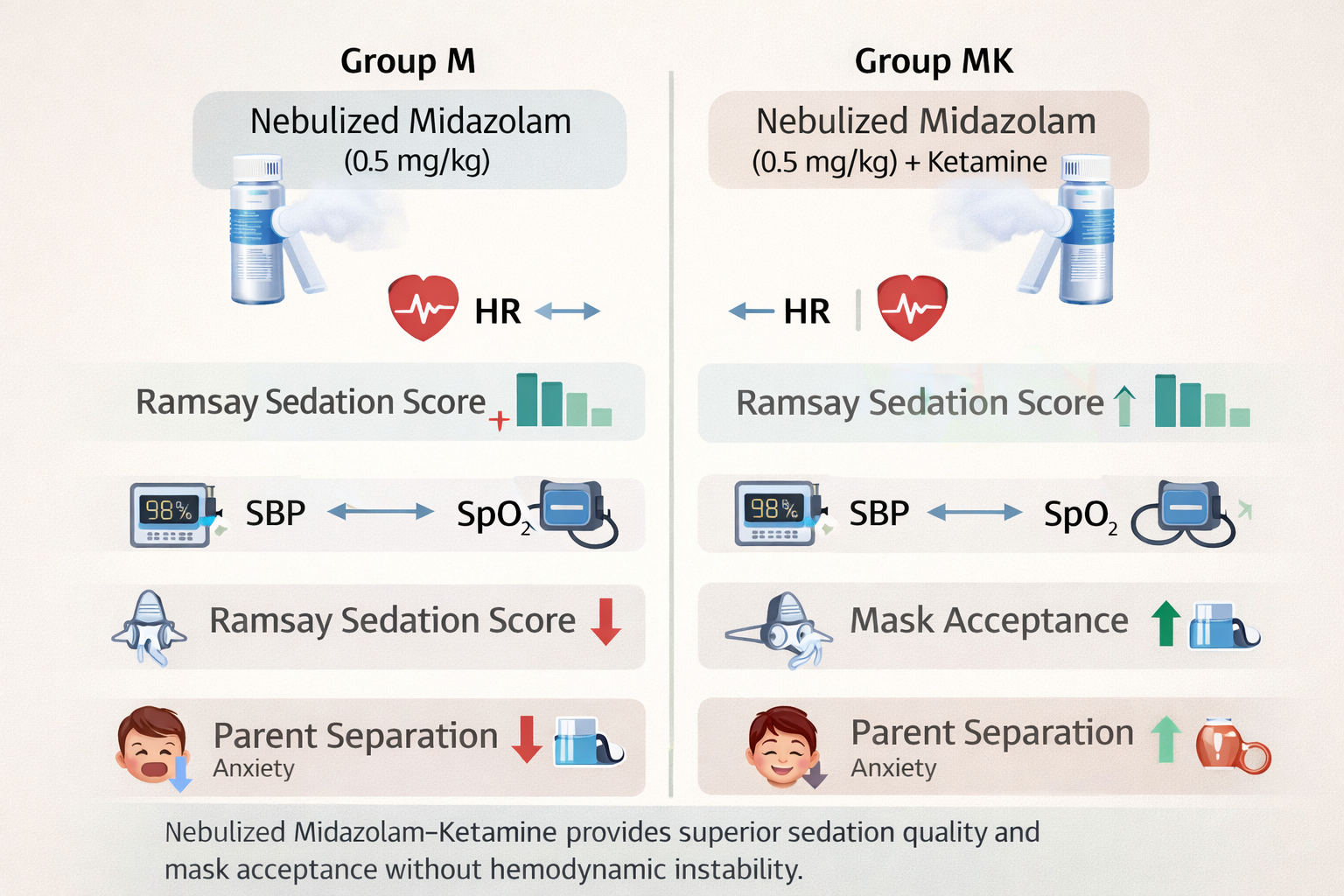
Results: A significant difference in oxygen saturation (SpO2) at the 30th min emerged between nebulized and oral midazolam (P = 0.006). Ramsay Sedation scores within 30 min demonstrated comparable sedation levels between Groups N and O. Face mask acceptance scores were excellent in both groups, with no significant differences. Parental separation anxiety scores and the mask acceptance score at the 30th min revealed no statistically significant differences at various time points (P > 0.05).
Original Article |
|
Conclusions: In pediatric patients undergoing ophthalmic surgeries, nebulized midazolam is as effective as oral midazolam for sedation. The nebulized form is better tolerated and results in significantly improved SpO2 levels 30 min after administration. These findings indicate that nebulized midazolam is a safe and effective alternative to oral midazolam for sedative premedication in young children.
Keywords: Midazolam, Nebulized, Pediatrics, Preoperative sedation
Address for correspondence: Saghar Samimi, Farabi Eye Hospital, Qazvin Square, South Karegar Street, Tehran, Iran.
E‑mail: sagharsamimi1344@gmail.com
Submitted: 20‑Jan‑2024; Revised: 26‑Dec‑2024; Accepted: 27‑Dec‑2024; Published: 18‑Sep‑2025
IntroductIon Midazolam, a sedative drug, has shown greater efficacy in reducing anxiety and enhancing GABA buildup.4-6
Pediatric ophthalmic surgeries can be traumatic for young children, leading to long-term behavioral changes.1 This study aims to evaluate the effectiveness of nebulized Premedication and good sedation are crucial in pediatric midazolam compared to its oral form as a sedative premedication anesthesia to alleviate anxiety, reduce vagal stimulation, for pediatric ophthalmic surgeries, focusing on efficacy, maintain stable hemodynamic parameters, improve patient satisfactory sedation rate, parental separation anxiety score, cooperation, and prevent postoperative psychological
sequelae.2,3 This is an open access journal, and articles are distributed under the terms of the Creative
Ac | cess this article online |
Quick Response Code: | Website: https://journals.lww.com/joco |
DOI: 10.4103/joco.joco_23_24 |
How to cite this article: Ostadalipour A, Maleki A, Malekianzadeh B, Sadeghi M, Takzare A, Nazari N, et al. Efficacy and safety of nebulized midazolam versus oral midazolam as sedative premedication in pediatric surgeries. J Curr Ophthalmol 2024;36:413-8. |
Commons Attribution-NonCommercial-ShareAlike 4.0 License, which allows others to remix, tweak, and build upon the work non-commercially, as long as appropriate credit is given and the new creations are licensed under the identical terms.
For reprints contact: WKHLRPMedknow_reprints@wolterskluwer.com
© 2025 Journal of Current Ophthalmology | Published by Wolters Kluwer – Medknow
anesthesia mask acceptance, and perioperative hemodynamic status up to 30 min postpremedication.
Methods
A double-blinded, randomized controlled trial (RCT) was conducted at the Farabi Eye Hospital in Tehran, Iran, between November 2022 and January 2023. The Ethics Committee of the Tehran University of Medical Sciences provided the ethical approval (approval number: IR.TUMS.FARABIHOSPITAL.
REC.1401.046); additionally, the study was registered at the Iranian Registry of Clinical Trials (IRCT) under the IRCTID: IRCT20230117057153N1. All eligible participants in the trial provided written informed consent before the allocation.
Patients aged 3–7 years old with the American Society of Anesthesiologists (ASA) physical status 1 and 2, who are scheduled for elective strabismus surgeries with a written informed consent form from their guardians were included in the study.
The exclusion criteria contain previous hypersensitivity reactions with midazolam, respiratory distress, asthma, or any underlying disease.
According to Majidinejad et al.,7 the oral midazolam group required 33.8 ± 7.5 min to get a satisfactory level of drowsiness. With a power of 0.95 and a type I error of 0.05, assuming a 20% difference between the two groups, 33 patients per group were needed for the sample size, which may be rounded up to 35 patients per group to account for potential dropouts.
Individuals were randomly (via 4-block randomization method) assigned to receive premedication with either nebulized midazolam (Group N, 35 individuals) or oral midazolam (Group O, 35 individuals) at the same dose. The randomization process used a computer-generated table, and group assignments were concealed in sealed, opaque envelopes. The researcher responsible for preparing the medications was not involved in data entry or analysis.
This study was conducted as a double-blinded RCT, where participants were unaware of their group assignments. However, it is acknowledged that those administering the treatment were aware of the group assignments due to the different routes of administration (nebulized vs. oral midazolam). The outcome assessors were blinded to the group assignments to minimize bias in the assessment process.
Both groups were allowed to ingest clear fluids and solid or semi-solid substances for up to 2 h and 8 h, respectively, before surgery. In the preanesthesia room, routine monitoring (oxygen saturation [SpO2], heart rate [HR], and blood pressure [BP]) was conducted with a parent present.
For Group N (nebulized midazolam), 0.5 mg/kg of midazolam (ampule midazolam 5 mg/1 ml manufactured by Aburaihan Pharmaceutical Company) was diluted in 5 ml of normal saline and administered through a face mask. For Group O, the oral solution was created by mixing 0.5 mg/kg of midazolam with 5 cc dextrose (vial dextrose 20% manufactured by Pasteur Institute Company) (due to the unavailability of standard midazolam syrup) and administered orally.
The sedation level was assessed 30 min after the administration of the medicine using the RAMSAY sedation scale (RSS).8 A score of 1 on this scale indicates that the patient is experiencing anxiety, agitation, restlessness, or a combination of these symptoms. Score 2 means the patient is focused, cooperative, and calm; score 3 points to that the patient only obeys commands; score 4 shows that the patient responds slowly to a light glabellar tap or loud auditory stimulus; score 5 reveals that the patient responds slowly to a light glabellar tap or loud auditory stimulus; score 6 implies that the patient shows no reaction. A “satisfactory” level of sedation was indicated by RSS scores of 2 and 3.
Parental separation anxiety level was measured based on the parental separation anxiety scale (PSAS), or behavioral criteria, as follows: 1: Excellent (easy separation), 2: Good (whimpers, slightly afraid or crying but easily reassured, not clinging) 3: Fair (cries and cannot quiet with reassurance, not clinging to parents), and 4: Poor (crying, need for restraint, and clinging to parents). PSAS scores of 1 and 2 signified acceptable separation, whereas scores of 3 and 4 were classified as difficult separation.9
The child’s acceptance of the mask was assessed using the Mask Acceptance Scale (MAS),10 which was introduced by the anesthesiologist and scored based on four scales: 1 point: Exemplary (fearless, collaborative, readily accepting the mask); 2 points: Satisfactory (mild apprehension towards the mask, easily pacified); 3 points: Average (moderate fear of the mask, not placated by reassurance); and 4 points: Inadequate (very frightened, sobbing, and resistant). In this study, mask reception acceptance was deemed “satisfactory” for both scores 1 and 2, and the satisfactory outcomes were noted independently for each group.
As the secondary outcomes the patient’s HR, systolic BP, and SpO2 were assessed at baseline (0 min) and at 15 min and 30 min following medication delivery in both groups; also, potential side effects were documented.
Statistical analysis
The mean ± standard deviation (SD) and frequency were used to describe the quantitative and categorical variables. The independent t-test, which compares age between two groups, paired t-test, and Chi-square test are statistical tests used for analytical components. Chi-square is used to compare the sex distribution between the control and study groups. The statistical analysis was conducted using SPSS version 25 (SPSS Inc., Chicago, IL, USA). The statistical significance level was set at P < 0.05. Following the method, the sample size was determined to include 32 participants in each study group, taking into account a 10% decrease in the sample size based on the average time required to achieve appropriate sedation.
results
The trial consisted of 70 participants, with 35 (50%) patients assigned to the O Group and 35 (50%) patients assigned to the N Group. Four patients were removed from the trial because their parents were dissatisfied, one patient was excluded due to a preexisting medical condition, and 32 (49.23%) patients assigned to O Group and 33 (50.76%) patients assigned to N Group remained to study until the end [Figure 1].
The demographic characteristics, initial measurements (HR, systolic blood pressure [SBP], and SpO2), and ASA physical state (I/II) of the research groups are presented in Tables 1 and 2. The two groups did not show any statistically significant differences (P > 0.05).
The RSS 30 min after medication administration showed no significant difference between N and O
Groups (P = 0.819) [Table 3]. According to the data analysis of the RSS, only one individual (3%) who received nebulized midazolam and two individuals (6.3%) who received oral midazolam had an RSS score of 1, indicating that they did not achieve a satisfactory level of drowsiness (fair sedation) following the administration of the drug. Twenty-three individuals (69.7%) from the N Group and 22 individuals (68.8%) from O Group achieved RSS 2, indicating a sufficient level of sedation. 27.3% of the patients in N Group, specifically 9 out of 33 patients, and 25% of the patients in O Group, specifically 8 out of 32 patients, achieved an RSS of 3, which is considered an appropriate level of sedation. There is no considerable difference in the level of sedation between the two groups.
The MAS was assessed in both groups and the results were presented in Table 3. It was found that 87.9% (29 out of 33) of patients in each group achieved an excellent MAS score. There was no significant difference between the groups (P = 0.391).
According to PSAS assessment, by the 30th min, 87.9% of patients in N Group and 81.3% in O Group had sedation scores that were considered satisfactory for parental separation anxiety, as shown in Table 3. There was no significant difference between the two groups, with a P = 0.449.
There were no statistically significant variations in the RSS, MAS, and PSAS scores between the two groups at 0, 15, and 30 min, as shown in Figure 2.
Table 2 shows the mean values and SDs of HR, SBP, and SpO2 measured at the beginning (0 min), 15 min, and 30 min following the administration of the medicine. There was no statistically significant difference in HR and SBP fluctuations
Figure 1: Consort diagram of study
Journal of Current Ophthalmology | Volume 36 | Issue 4 | October-December 2024
| |||||||||||||||||||||||||||||||||
ASA: American Society of Anesthesiologists, SD: Standard deviation Figure 2: Postintervention scores differences between two groups
Table 2: Vital signs differences between groups |
| ||
Variable | N Group (n=33), mean±SD | O Group (n=32), mean±SD | P |
SpO2 Baseline | 94.76±1.59 | 97.44±2.31 | 0.175 |
15 min | 97.83±2.33 | 96.83±1.84 | 0.059 |
30 min | 97.55±2.16 | 96.06±2.04 | 0.006 |
SBP Baseline | 94.93±8.32 | 93.56±10.03 | 0.603 |
15 min | 90.58±8.7 | 89.75±9.32 | 0.708 |
30 min | 91.30±9.5 | 89.41±7.51 | 0.377 |
HR Baseline | 110.94±13.59 | 108.69±21.312 | 0.612 |
15 min | 104.94±11.47 | 101.22±15.72 | 0.279 |
30 min | 104.33±14.02 | 98.19±16.20 | 0.107 |
SpO2: Oxygen sauration, SBP: Systolic blood pressure, HR: Heart rate,
SD: Standard deviation
Table 3: Comparison of sedation score, parental separation anxiety score, and mask acceptance score between groups | |||
Variable | N Group (n=33), n (%) | O Group (n=32), n (%) | P |
Ramsay score 3 | 9 (27.3) | 8 (25.0) | 0.819 |
2 | 23 (69.7) | 22 (68.8) |
|
1 | 1 (3.0) | 2 (6.3) |
|
PSAS Excellent | 29 (87.9) | 26 (81.3) | 0.449 |
Good | 3 (9.1) | 5 (15.6) |
|
Fair | 1 (3.0) | 0 |
|
Poor | 0 | 1 (3.1) |
|
MAS Excellent | 29 (87.9) | 28 (87.5) | 0.391 |
Good | 1 (3.0) | 3 (9.4) |
|
Fair | 2 (6.1) | 0 |
|
Poor | 1 (3.0) | 1 (3.1) |
|
PSAS: Parental Separation Anxiety Scale, MAS: Mask Acceptance Scale
at different times between both groups (P = 0.107, P = 0.377). While there was no significant difference in the average SpO2 levels before medication administration and 15 min (P = 0.175 and 0.059, subsequently), a significant differential was detected in SpO2 saturation at the 30th min between nebulized and oral midazolam (P = 0.006).
dIscussIon
Performing surgeries on pediatric patients presents difficulties due to factors such as parental separation and the anxiety caused by unfamiliarity in young children.11 The experience of undergoing ophthalmic surgery can be unpleasant for preschool children, both during the medical procedure itself and in the period leading up to it. This anxiety can potentially render the youngster susceptible to noncompliance and enduring behavioral alterations in life, such as enuresis, nocturnal terrors, and intense phobia of hospital settings and medical staff.12 Preoperative medicine and effective sedation are essential components of pediatric anesthesia as they help to alleviate anxiety, minimize vagal activation, maintain stable physiological parameters, enhance patient compliance, facilitate smooth recovery, and prevent postoperative psychological complications.13
The crucial aspect is finding a secure, efficient, devoid-of-pain, and effortless method for premedication to alleviate these undesirable symptoms. Therefore, we decide to assess the efficacy of nebulized midazolam in comparison to oral midazolam as a sedative premedication for pediatric eye surgery.
This study was a double-blinded RCT with seventy children classified as ASA class 1 or 2. The participants were randomly divided into two groups: N Group, consisting of 33 individuals who received nebulized midazolam, and O Group, consisting of 32 individuals who received oral midazolam at the same dosage. The findings indicated that both nebulized and oral administration of midazolam were efficacious and secure for achieving sedation, facilitating parental separation before surgery, maintaining stable basic parameters, and yielding an excellent mask acceptability score. There was no notable difference between the two groups, except for the SpO2 level at 30 min following delivery. The nebulized midazolam had a significantly higher average SpO2 compared to the oral midazolam at 30 min following delivery, as indicated by a statistically significant P = 0.006. There were no observed side effects in any of the two groups.
The study conducted by Soaida et al.1 also provides support for our findings. They discovered that there was no notable difference in the Ramsay sedation score between nebulized and oral midazolam in their research including pediatric patients undergoing general and urological procedures. Indeed, the nebulized form was administered at half the dosage compared to our own dosage. In our investigation, a significant difference was only found in the level of SpO2 at the 30th min between the nebulized and oral administration of midazolam (P = 0.006). However, in their investigation, all the measures exhibited a drop within 15 min following premedication.
In the comparisons of the effects of two different doses of midazolam nebulization, Kaabachi et al.14 discovered that mask nebulization with 1 mg/kg of midazolam–but not 0.5 mg/kg–seems to be a quick, safe, and efficient method for premedication in children. Nebulized midazolam at a dosage of 0.5 mg/kg proved to be safe and effective enough for our needs in our study.
In their study, McCormick et al.15 administered nebulized midazolam at a dosage of 0.2 mg/kg for pediatric premedication. However, they discovered that this dose did not provide a sufficient level of drowsiness. For this purpose, a higher dose may be required. We supplied a dosage of 0.5 mg/kg, and according to the RSS, the majority of our patients achieved sufficient sedation.
Preoperatively, the comparison between changes in HR and SBP showed no significant difference, which was similar to the results found by Mounika et al.,16 and another study conducted by Özmert et al.17
Comparing sedation scores following nebulized and intravenous Midazolam, Mounika et al.16 found that sedation was more successful at a greater dose of 1 mg/kg. Our study, however, did not find any statistically significant changes, which could be perhaps due to the variance in dosage in the present study.
The SpO2 level evaluated after medication administration did not differ significantly in the study by Tavassoli-Hojjati et al.18 Conversely, at 30 min after administration, the nebulized midazolam group exhibited a significantly higher average SpO2 level compared to the oral midazolam group, with a P = 0.006 indicating statistical significance.
Yuen et al. determined that administering an oral dose of 0.5 mg/kg midazolam is sufficient as a premedication medication, which aligns with our findings.5
By contrasting oral and intranasal midazolam, Alex et al.19 found that the oral midazolam group had greater acceptability than the nasal group. Furthermore, Verma et al.20 Midazolam nasal spray was shown to be less tolerated by Verma et al.20 in their investigation utilizing oral and nasal sprays.
In this study, we showed that the nebulized administration method was as well-accepted compared to the oral administration method, with no significant statistical difference. The study results may be affected by the limited sample size and the single-center study, which may lead to potential observer bias. A larger, multicenter study could offer more thorough insights into the efficacy and safety of different routes of midazolam administration for this purpose in pediatric patients.
In conclusion, nebulized and oral midazolam effectively induced sedation in preschool children, facilitating their separation from parents and ensuring successful mask acceptance. Furthermore, considering the ease of administration and the minimal decrease in SpO2, it may be inferred that nebulized midazolam is a viable and secure option as a preanesthetic medication for children undergoing general anesthesia.
Acknowledgment
This research was granted by the Anesthesia, Critical Care, and Pain Management Research Center, Tehran University of Medical Sciences, Tehran, Iran, with grant number 63935.
Financial support and sponsorship
This study, as a part of Sumaiya Zahra M.D. thesis, was supported by Tehran University of Medical Sciences-International Campus.
Conflicts of interest
The authors declare that the research was conducted in the absence of any commercial or financial relationships that could be constructed as a potential conflict of interest. references
- Soaida SM, Hafez ME, Girgis KK, Marie MM, Selim MA. Nebulized versus oral midazolam as a sedative premedication in pediatric anesthesia: A randomized controlled double-blinded study. Egypt J Anaesth 2022;38:476-82.
- Vaishnavi BD, Goyal S, Sharma A, Kothari N, Kaloria N, Sethi P, et al. Comparison of intranasal dexmedetomidine-midazolam, dexmedetomidine-ketamine, and midazolam-ketamine for premedication in paediatric patients: A double-blinded randomized trial. Anaesthesiol Intensive Ther 2023;55:103-8.
- Daabiss MA, Hashish MS. Dexmedetomidine versus ketamine combined with midazolam; a comparison of anxiolytic and sedative premedication in children. Br J Med Pract 2011;4:a441.
- Lingamchetty TN, Hosseini SA, Saadabadi A. Midazolam. In:
StatPearls. Treasure Island (FL): StatPearls Publishing; 2023.
- Yuen VM, Hui TW, Irwin MG, Yuen MK. A comparison of intranasal dexmedetomidine and oral midazolam for premedication in pediatric anesthesia: A double-blinded randomized controlled trial. Anesth Analg 2008;106:1715-21.
- Pacifici GM. Clinical pharmacology of midazolam in neonates and children: Effect of disease-a review. Int J Pediatr 2014;2014:309342.
- Majidinejad S, Taherian K, Esmailian M, Khazaei M, Samaie V. Oral midazolam-ketamine versus midazolam alone for procedural sedation of children undergoing computed tomography; a randomized clinical trial. Emerg (Tehran) 2015;3:64-9.
- Ramsay MA, Savege TM, Simpson BR, Goodwin R. Controlled sedation with alphaxalone-alphadolone. Br Med J 1974;2:656-9.
- Dashiff CJ, Weaver M. Development and testing of a scale to measure separation anxiety of parents of adolescents. J Nurs Meas 2008;16:61-80.
- Akin A, Bayram A, Esmaoglu A, Tosun Z, Aksu R, Altuntas R, et al. Dexmethedimidine versus midazolam for premedication of pediatric patients undergoing anesthesia. Paediatr Anaesth 2012;22:871-6.
Journal of Current Ophthalmology | Volume 36 | Issue 4 | October-December 2024 |
- Santapuram P, Stone AL, Walden RL, Alexander L. Interventions for parental anxiety in preparation for pediatric surgery: A narrative review.
Children (Basel) 2021;8:1069.
- Zhou Z, Hu C, Zhang Y, Zhang P. On the psychological effects of child-like space design on preschoolers under anesthesia: A qualitative study. Health Sci Rep 2024;7:e70020.
- Mustafa MS, Shafique MA, Zaidi SD, Qamber A, Rangwala BS, Ahmed A, et al. Preoperative anxiety management in pediatric patients: A systemic review and meta-analysis of randomized controlled trials on the efficacy of distraction techniques. Front Pediatr 2024;12:1353508.
- Kaabachi O, Ouezini R, Hajjej Z, Rais K, Koubaa W. Comparative study between mask nebulisation and oral administration of midazolam for premedication in children. Eur J Anaesthesiol 2008;25:158.
- McCormick ASM, Thomas VL, Berry D, Thomas PW. Plasma concentrations and sedation scores after nebulized and intranasal midazolam in healthy volunteers. Br J Anaesth 2008;100:631-636.
- Mounika M, Aswathy R, Shriyan A, Roshan AO. Comparison of sedation scores after nebulized and intravenous Midazolam in children. Int J Contemp Pediatr 2018;5:1083-6.
- Özmert S, Sever F, Tiryaki HT. Evaluation of the effects of sedation administered via three different routes on the procedure, child and parent satisfaction during cystometry. Springerplus 2016;5:1496.
- Tavassoli-Hojjati S, Mehran M, Haghgoo R, Tohid-Rahbari M, Ahmadi R. Comparison of oral and buccal midazolam for pediatric dental sedation: A randomized, cross-over, clinical trial for efficacy, acceptance and safety. Iran J Pediatr 2014;24:198-206.
- Alex S, Coelho B, Ambareesha M. Comparison of intranasal and oral midazolam as premedicant drug in preschool children. J Anaesthesiol Clin Pharmacol 2008;24:333-6.
- Verma RK, Paswan A, De A, Gupta S. Premedication with midazolam nasal spray: An alternative to oral midazolam in children. Anesth Pain Med 2012;1:248-51.